Where access to land tends to restrict stocking rates on Irish farms, on Scottish farms, housing facilities are a key factor limiting expansion in cattle numbers.
That said, many sheds are constructed to an extremely high specification. In addition, most livestock sheds are built to serve many purposes.
The overwhelming majority of Scottish livestock sheds are built as straw bedded courts for wintering cattle.
Solid concrete is the preferred flooring option over the slatted systems more commonly found on Irish farms, as straw is widely available and much cheaper compared with Ireland.
Scottish livestock farmers still experience the same issues as Irish farmers
When cattle are not being housed, the solid flooring option serves as a grain store during harvest, as well as providing storage for straw bales and machinery at different stages during the year.
That said, Scottish livestock farmers still experience the same issues as Irish farmers, with tweaks being made to ventilation, feeding and lying space from year to year.
Outlined are some examples of low cost alterations to livestock housing on some of the farms participating in the Farm Profit Programme, run by the Farmers Journal and Aberdeen and Northern Marts.
The alterations were made to increase airflow and feed space, as well as increasing the capacity to hold more cattle.
Picture 1
The shed featured is used to winter spring born calves after weaning. As such, ventilation is crucial. Fresh air entering the shed displaces stale air that presents a health risk from airborne respiratory diseases.
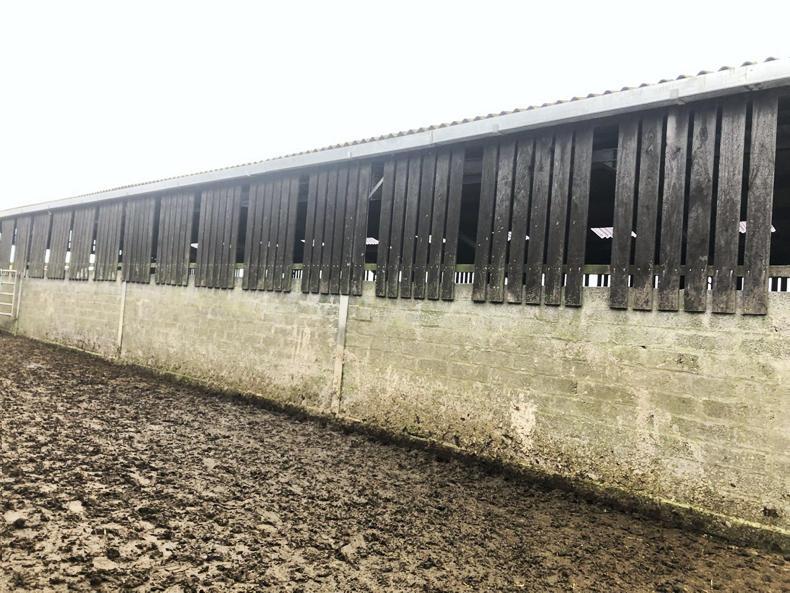
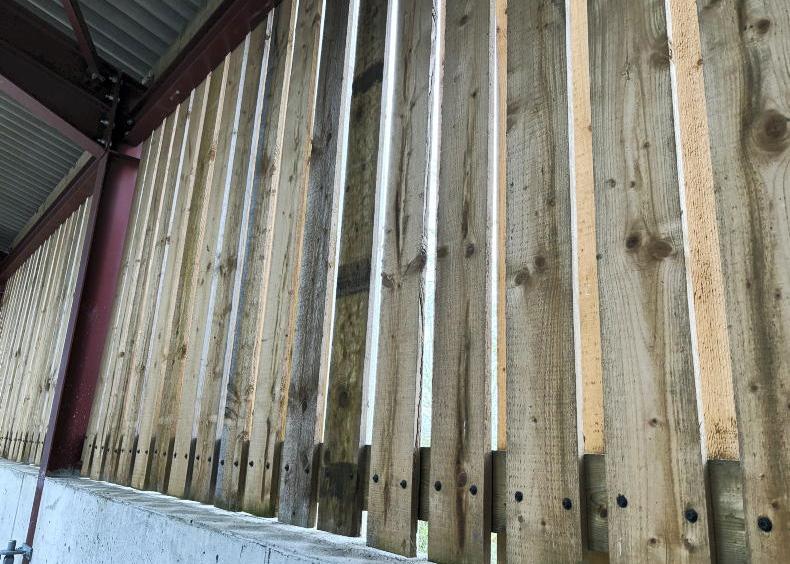
External cladding has been arranged in blocks of 6in panels with approximately 8in between each section of cladding.
Both sides of the shed have the same cladding spacing. Airflow has been increased in the shed, without compromising animal welfare or comfort through the increased spacing of boards.
Picture 2 - Open roof ridge.
Picture 2
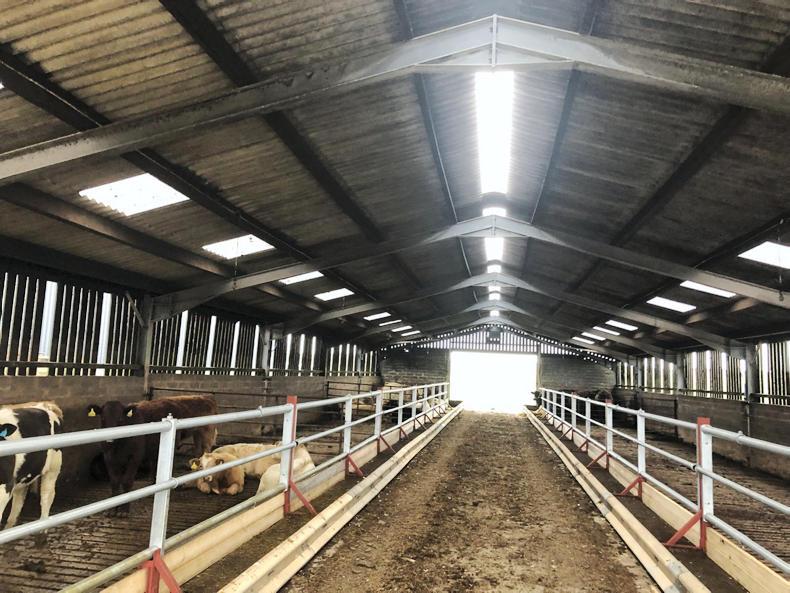
The roof ridge has also been removed from the shed as stale air needs an exit route, located at the highest point of the shed.
The increased spacing with timber cladding would be much less effective without the open ridge. The roof of the shed also makes use of Perspex sheeting to increase natural lighting in sheds.
Picture 3 - Old tombstone feed barriers.
Picture 3
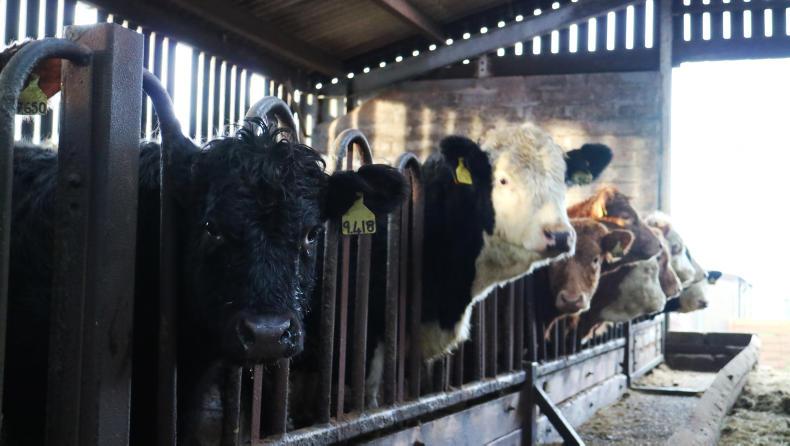
The shed previously used tombstone feed barriers. Unfortunately, these barriers restricted the number of cattle which could be housed in each pen, as there was insufficient feed space for young stock.
The barriers created additional bullying when fresh feed and concentrates where offered to animals. These barriers were replaced in 2019.
Picture 4 - New horizontal feed barriers.
Picture 4
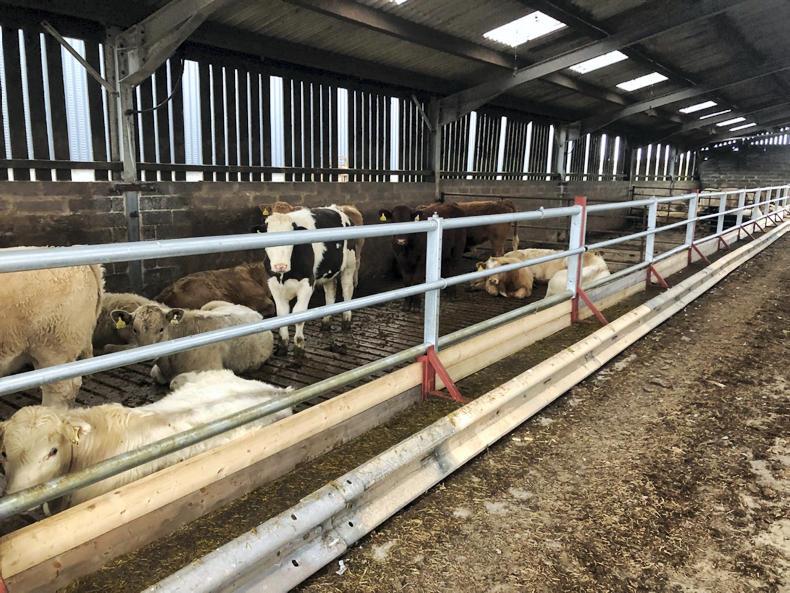
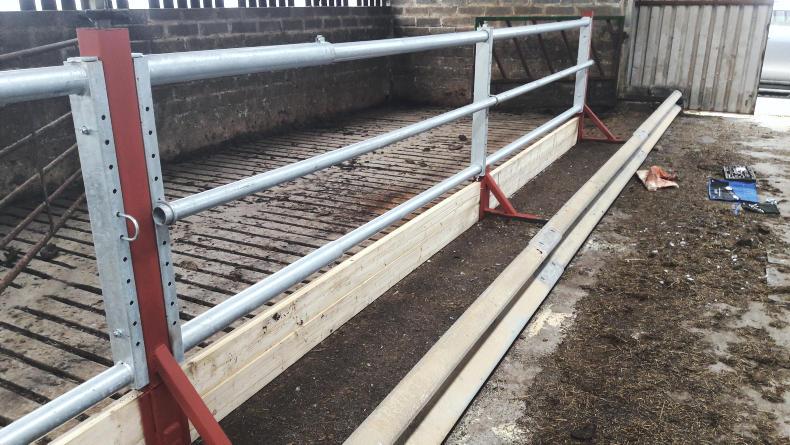
Horizontal barriers have now been installed, which are adjustable in terms of height. As these barriers allow more cattle to feed at the same time, each pen can hold an additional two to three animals depending on their liveweight.
Picture 5 - Feed bunker.
Picture 5
To reduce the time and labour requirement for pushing silage into cattle morning and evening, crash barriers have been fixed around 18in from the feed barrier using simple brackets and can be easily removed if necessary.
Cattle are fed using a diet feeder which can place the feed cleanly between the feed face and edge of the barrier. As cattle cannot push silage away from the feed face, it eliminates the need to push silage up to cattle manually.
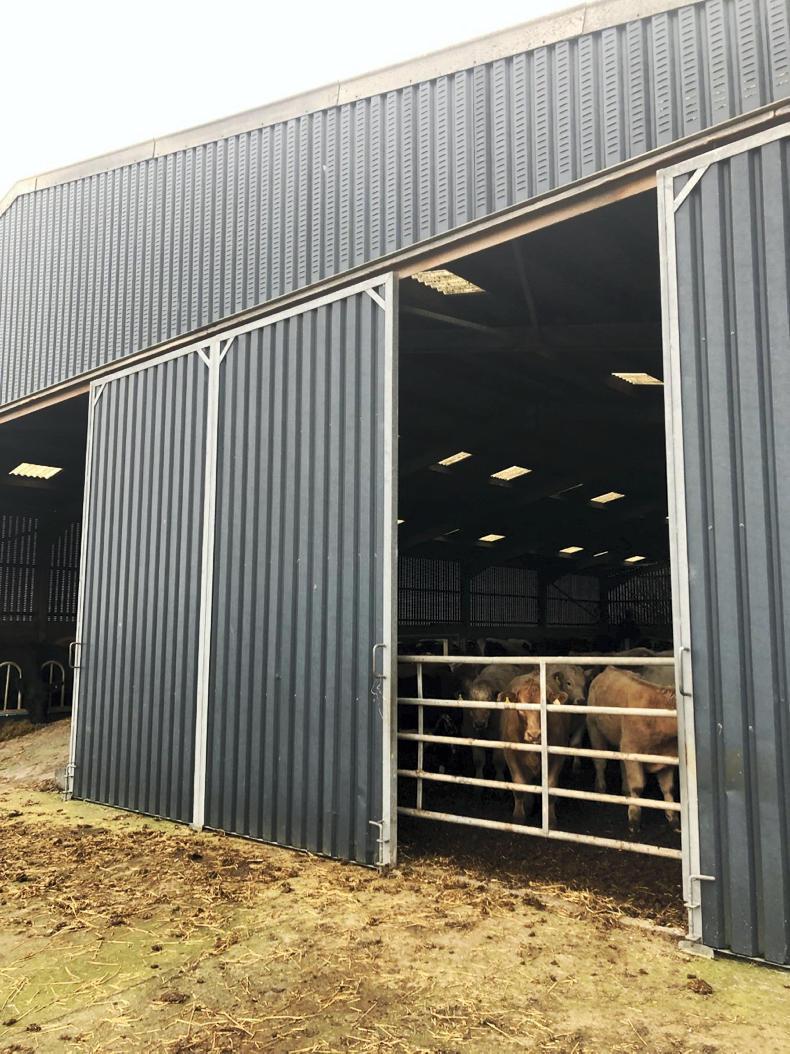
Picture 6 - Ventilation-controlled doors.
Picture 6
As well as allowing access to sheds for cattle and machinery, the doorways are also used to control ventilation in cattle housing. Internal gates are used to keep animals securely penned when doors are opened.
Read more
Home Farm: slatted building – renewal or abandonment?
Little Brexit clarity for NFU farmers
Where access to land tends to restrict stocking rates on Irish farms, on Scottish farms, housing facilities are a key factor limiting expansion in cattle numbers.
That said, many sheds are constructed to an extremely high specification. In addition, most livestock sheds are built to serve many purposes.
The overwhelming majority of Scottish livestock sheds are built as straw bedded courts for wintering cattle.
Solid concrete is the preferred flooring option over the slatted systems more commonly found on Irish farms, as straw is widely available and much cheaper compared with Ireland.
Scottish livestock farmers still experience the same issues as Irish farmers
When cattle are not being housed, the solid flooring option serves as a grain store during harvest, as well as providing storage for straw bales and machinery at different stages during the year.
That said, Scottish livestock farmers still experience the same issues as Irish farmers, with tweaks being made to ventilation, feeding and lying space from year to year.
Outlined are some examples of low cost alterations to livestock housing on some of the farms participating in the Farm Profit Programme, run by the Farmers Journal and Aberdeen and Northern Marts.
The alterations were made to increase airflow and feed space, as well as increasing the capacity to hold more cattle.
Picture 1
The shed featured is used to winter spring born calves after weaning. As such, ventilation is crucial. Fresh air entering the shed displaces stale air that presents a health risk from airborne respiratory diseases.
External cladding has been arranged in blocks of 6in panels with approximately 8in between each section of cladding.
Both sides of the shed have the same cladding spacing. Airflow has been increased in the shed, without compromising animal welfare or comfort through the increased spacing of boards.
Picture 2 - Open roof ridge.
Picture 2
The roof ridge has also been removed from the shed as stale air needs an exit route, located at the highest point of the shed.
The increased spacing with timber cladding would be much less effective without the open ridge. The roof of the shed also makes use of Perspex sheeting to increase natural lighting in sheds.
Picture 3 - Old tombstone feed barriers.
Picture 3
The shed previously used tombstone feed barriers. Unfortunately, these barriers restricted the number of cattle which could be housed in each pen, as there was insufficient feed space for young stock.
The barriers created additional bullying when fresh feed and concentrates where offered to animals. These barriers were replaced in 2019.
Picture 4 - New horizontal feed barriers.
Picture 4
Horizontal barriers have now been installed, which are adjustable in terms of height. As these barriers allow more cattle to feed at the same time, each pen can hold an additional two to three animals depending on their liveweight.
Picture 5 - Feed bunker.
Picture 5
To reduce the time and labour requirement for pushing silage into cattle morning and evening, crash barriers have been fixed around 18in from the feed barrier using simple brackets and can be easily removed if necessary.
Cattle are fed using a diet feeder which can place the feed cleanly between the feed face and edge of the barrier. As cattle cannot push silage away from the feed face, it eliminates the need to push silage up to cattle manually.
Picture 6 - Ventilation-controlled doors.
Picture 6
As well as allowing access to sheds for cattle and machinery, the doorways are also used to control ventilation in cattle housing. Internal gates are used to keep animals securely penned when doors are opened.
Read more
Home Farm: slatted building – renewal or abandonment?
Little Brexit clarity for NFU farmers






SHARING OPTIONS